Anglo-Saxon kings: Offa to Harold II
From Offa's first realistic English portrait to Harold II's PAX type. The named-king Anglo-Saxon penny, the 973 reform, and the late types.
The Anglo-Saxon broad penny standard (973 onwards) carries the named king on the obverse and the moneyer plus mint on the reverse — an arrangement that lasted until the Norman period and into the Plantagenets. Before 973, the named-king sceattas of Northumbria (Eadberht, Æthelred II, Eanred) blaze a trail, but the kingdom-by-kingdom coinage of Mercia, Wessex and East Anglia under Offa, Alfred and their successors is what really establishes the English coinage we recognise.




Offa of Mercia (757–796) — the first English king on a coin
Offa’s reign sees the transition from the abstract sceatta to the broad penny. From about 760 onwards he begins striking a 20 mm silver penny with his name (OFFA REX) and sometimes a stylised but recognisable portrait. The penny he creates lasts almost without modification until the Norman period. Three distinct phases of Offa coinage:
- Light coinage (c.760–792): ~1.0 g pennies, smaller module. Multiple moneyers, including Canterbury and East Anglian centres.
- Heavy coinage (792–796): ~1.3–1.4 g pennies. Larger, broader, with clearer iconography.
- Offa’s queen Cynethryth: one of very few early-medieval European queens to have coinage in her own name. Pennies with
CYNEDRTH REGINAare scarce and prized.
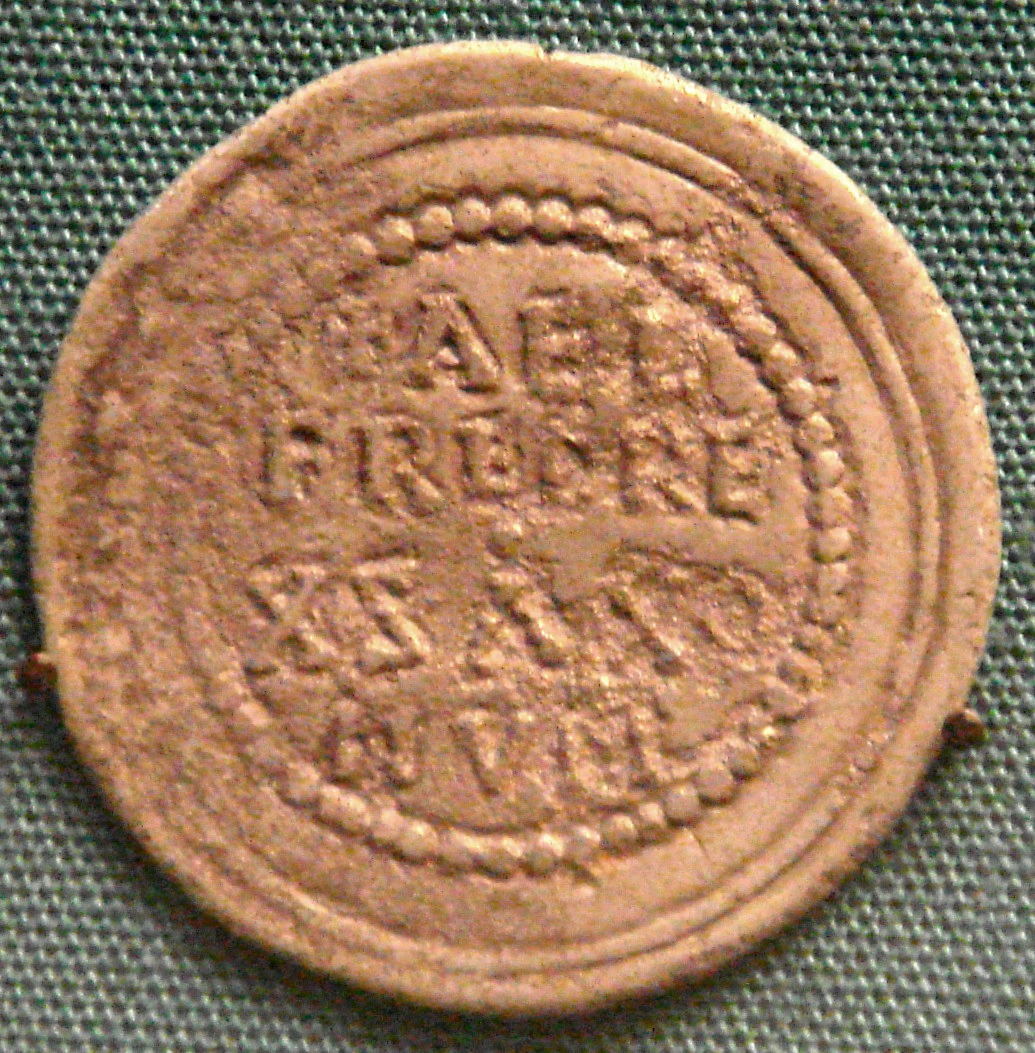
Alfred the Great (871–899) — Wessex against the Danes
Alfred came to the throne mid-Viking invasion and his coinage reflects military priority. Diagnostic Alfredian penny types:
- Cross-and-lozenge type— the most common Alfredian penny. Reverse: a stylised cross with a small lozenge (diamond) at the centre.
- Two-line type— later issue. Reverse: the moneyer’s name in two lines across the field, no cross.
- London monogram (LVNDONIA)— Alfred’s recapture of London from the Danes is commemorated with a monogram-type penny featuring a stylised L-V-N-D-N monogram. Highly prized.
Edward the Elder (899–924)
Alfred’s son completed the conquest of the Danelaw and consolidated Wessex into a kingdom covering most of modern England. His coinage retains the cross-and-lozenge and two-line types of his father, with the addition of pictorial reverse types — building, flower, hand-of-providence — that are scarcer but very distinctive when found.
Athelstan (924–939) — first king of all England
Athelstan is the first ruler to title himself REX TOTIVS BRITANNIAE(“king of all Britain”), and his coinage reflects the consolidation. Types include:
- Crowned bust right— rare and prized. Probably the first crowned portrait on an English coin.
- Circumscription type— legend around a cross on both faces, no portrait. Common workhorse type.
- Building type— reverse shows a stylised building (possibly a church) with a cross above. Scarcer; from northern mints.
Edgar (959–975) — the 973 reform
Edgar’s reform of 973 is the watershed of Anglo-Saxon coinage. From this date:
- The broad penny is standardised at one weight (~1.4 g) and one module (~18–22 mm) across all English mints.
- The portrait becomes a left-facing crowned bust.
- Reverse types are unified into a small set, replacing the regional diversity of earlier issues.
- The pattern of changing the design every 5–6 years (each new “type”) begins, which gives the late Anglo-Saxon and Norman coinages such tight chronological resolution.
The late Anglo-Saxon types (973–1066)
From Edgar to Harold II, English coinage runs through a sequence of named types. Each is named for its reverse design and corresponds to a fairly tight time-window:
| Type | Years | Reverse design | King(s) |
|---|---|---|---|
| First Small Cross | 973–c.985 | Small cross within inner circle | Edgar, Edward the Martyr, Æthelred II |
| Long Cross | c.997–1003 | Long voided cross extending to the rim | Æthelred II |
| Helmet | c.1003–1009 | Helmeted bust on obverse | Æthelred II |
| Last Small Cross | c.1009–1016 | Small cross + legend | Æthelred II, Edmund Ironside |
| Quatrefoil | c.1018–1024 | Cross within a quatrefoil | Cnut |
| Pointed Helmet | c.1024–1030 | Helmet with prominent point | Cnut |
| Short Cross | c.1030–1035 | Short cross within inner circle | Cnut, Harold I |
| Jewel Cross | c.1035–1040 | Cross with jewels in angles | Harold I, Harthacnut |
| Arm and Sceptre | c.1040–1044 | Hand holding sceptre | Harthacnut |
| Pacx | c.1042–1044 | PACX in angles of cross | Edward the Confessor |
| Expanding Cross | c.1050–1053 | Cross with widening arms | Edward the Confessor |
| Sovereign / Eagles | c.1055–1056 | Confessor enthroned; eagles in angles | Edward the Confessor |
| Pyramids | c.1064–1066 | Pyramid-shaped marks in cross angles | Edward the Confessor |
| PAX | 1066 | PAX in cross angles | Harold II |
Cnut (1016–1035) — English king of a North-Sea empire
Cnut ruled England, Denmark and Norway. His English coinage continues the Anglo-Saxon broad penny standard but introduces three iconic types:
- Quatrefoil(c.1018–1024) — reverse: a four-lobed quatrefoil with a cross inside. Common UK find.
- Pointed Helmet(c.1024–1030) — obverse: bust wearing a distinctive pointed helmet. Common.
- Short Cross(c.1030–1035) — cross within the inner circle. The earliest version of a pattern that Henry II revives 150 years later.
Edward the Confessor (1042–1066)
The Confessor’s long reign produces the most varied late Anglo-Saxon coinage. His sovereign-and-eagles type (showing the king enthroned facing) is particularly distinctive and shows the influence of Byzantine prototypes. His pyramids type, struck in the final years before the Norman conquest, is the immediate predecessor to William I’s first issues.
Harold II (1066) — the PAX type
Harold II reigned for just nine months between Edward the Confessor’s death in January 1066 and his own death at Hastings in October. He struck a single type: the PAX penny, with the letters P-A-X in the four angles of the reverse cross (echoing William I’s later PAXS type but with the older shorter spelling).

Procedural identification
- Confirm Anglo-Saxon periodby module (18–22 mm broad penny), weight (1.0–1.5 g, depending on reform), and obverse bust with a king’s name.
- Identify the reverse type. Match to the late Anglo-Saxon types table. Each type corresponds to a 4–6 year window.
- Read the obverse legend for the king’s name.
OFFA(Mercia, 757–96),ELFRED(Wessex, 871–99),EDWARD(899–924 / 957–75 / 1042–66 — ambiguous without other clues),EDGAR,AEDELRED,CNVT,HAROLD. - Read the moneyer + mint on the reverse. Together with the type, this attributes the coin to a specific issue and mint at a precise time.
Try DetectID on a real find
Upload a photo, add anything you measured, and we’ll return a calibrated shortlist with period, denomination, ruler and reasoning chain — the same diagnostic logic the guide above is built on.
Identify a find