Victorian copper and bronze: 1838–1901
Young Head, Jubilee Head, Old Head. The 1860 switch from heavy copper to lighter bronze, and the bun penny that ran for 34 years.
Victoria’s coinage runs 1837–1901 and is the single most common detector find in the post-medieval category. Three bust types, a categorical 1860 switch from heavy copper to lighter bronze, and a denomination range from the bun-head farthing to the “double florin”. Here’s the framework for placing one.
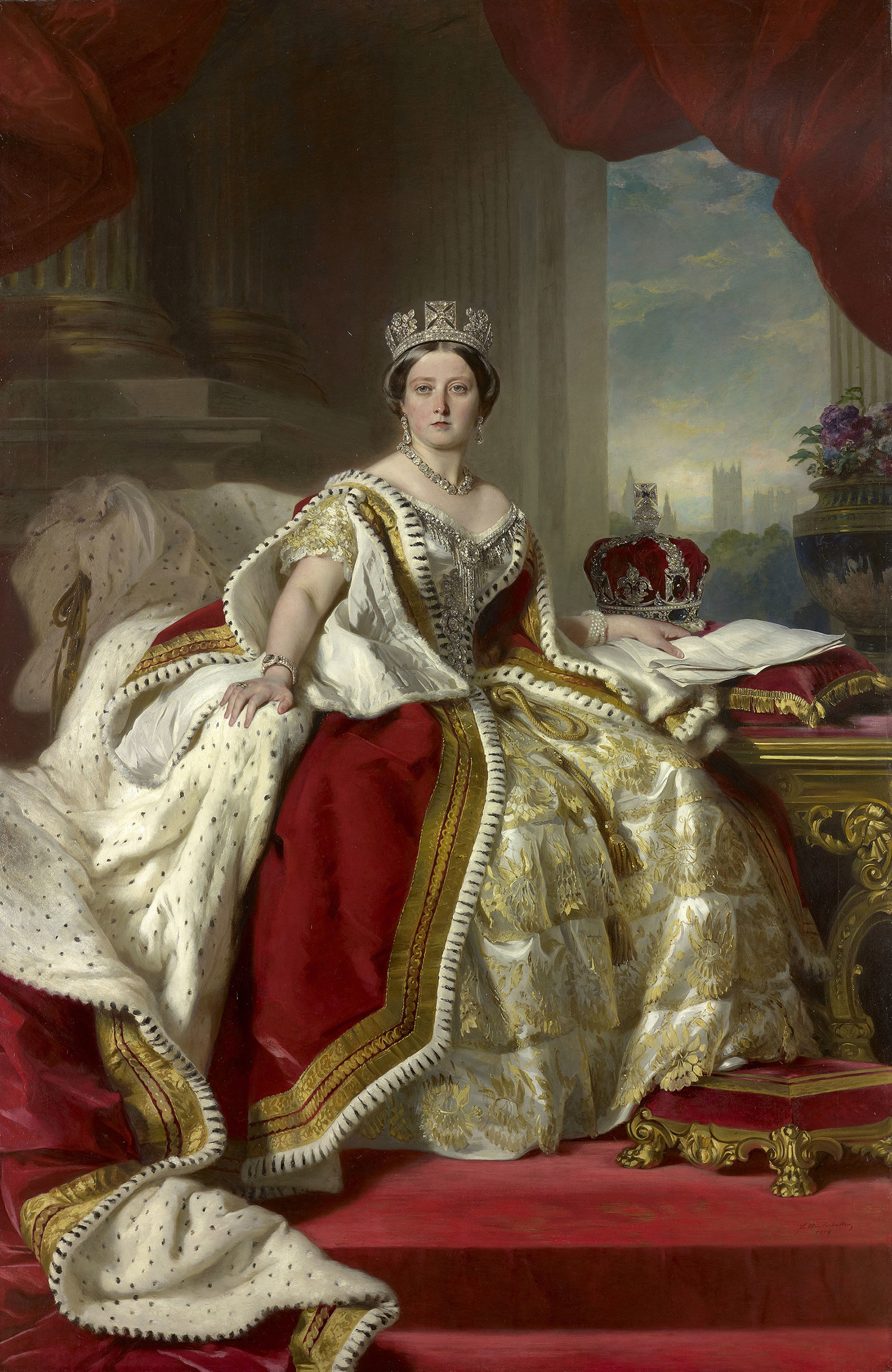


The three Victorian busts
Victoria’s 63-year reign was the longest of any British monarch before Elizabeth II, and the coinage portrait was updated twice to reflect her age:
| Bust | Years | Description |
|---|---|---|
| Young Head | 1838–1887 | Hair gathered in a bun, fillet band, no crown. The default coinage portrait for half the reign. |
| Jubilee Head | 1887–1893 | Small crown perched on head, drapery on the bust. Issued for the Golden Jubilee. Widely disliked at the time. |
| Old Head / Veiled Head | 1893–1901 | Mature queen, widow's veil, small crown. Final coinage portrait. |
Young Head copper (1838–1860) and Young Head bronze (1860–1887) share the same portrait but are categorically different metals and sizes. The Jubilee Head is briefly issued before being replaced. The Old Head runs through the late 1890s and into 1901.
The 1860 metal switch
Until 1860, British copper coinage was struck on the same heavy flan standard introduced by the 1797 cartwheel reform. Pennies were 34 mm and 18.9 g; halfpennies 29 mm and 9.4 g; farthings 23 mm and 4.7 g. The metal value matched (or nearly matched) the face value. By the 1850s the rising copper price made this unsustainable, and in 1860 the coinage switched to a smaller flan in bronze (95% copper, 4% tin, 1% zinc):
| Denomination | Copper (pre-1860) | Bronze (1860+) |
|---|---|---|
| Penny | 34 mm, 18.9 g | 30.8 mm, 9.4 g |
| Halfpenny | 29 mm, 9.4 g | 25.5 mm, 5.7 g |
| Farthing | 23 mm, 4.7 g | 20.2 mm, 2.8 g |
The bronze coinage proved durable enough to last until decimalisation in 1971 — a Victorian bronze penny circulated as legal tender for over a century. Many of the worn pennies and halfpennies you find as a detectorist were lost in the late 19th or early 20th century, by which point they’d already been heavily used.
The bun penny (1860–1894)
The Young Head bronze penny is universally known as the “bun penny” for the hair bun at the back of Victoria’s head. It’s the most common Victorian detector find — struck in vast quantities (over 200 million annually in some years) and lost in proportionate numbers. The reverse shows Britannia seated facing right with trident, shield and (variously) a lighthouse and ship in the background.
Victorian silver alongside the copper / bronze
For context, Victoria’s silver coinage continues from the Restoration milled standard and runs in parallel with the copper / bronze. The Maundy series (penny, twopence, threepence, fourpence) is small but well-struck silver; the threepence is the most-encountered Maundy detector find. Larger silver runs sixpence, shilling, florin, halfcrown, and (briefly) the double florin (1887–90). The crown is also struck, but only intermittently.
The Jubilee Head and Old Head silver
For completeness, the silver coinage adopted the Jubilee Head in 1887 alongside the bronze and then switched to the Old Head in 1893. Coppers stuck with the Young Head until 1894 before catching up with the Old Head — so there’s a brief period (1887–94) when you can find Jubilee Head silver and Young Head bronze in the same pocket. By 1894 all denominations are on the Old Head.
Dating a Victorian coin
Victorian coinage carries the year clearly on the reverse (for bronze and copper) or below the bust (for silver). When the date is worn off, the bust type alone narrows attribution to a decade-window:
- Young Head copper, 23–34 mm: 1838–1860.
- Young Head bronze, 20.2–30.8 mm: 1860–1894.
- Jubilee Head silver: 1887–1893 only.
- Old Head silver or bronze: 1893 or 1894–1901.
The threshold of legal tender
Victorian bronze coinage circulated as legal tender until 1971 decimalisation. Pre-1860 copper coinage was demonetised earlier but a lot of it still ended up in pockets and tills, getting lost in the late 19th century. This long circulation explains why Victorian copper / bronze finds are so worn — many lost Victorian pennies are post-WWI losses of coins struck in 1860.
Procedural identification
- Confirm copper or bronze. Patina colour and weight: a 1838 copper penny weighs twice as much as an 1880 bronze penny of nearly the same diameter.
- Identify the bust type. Young Head (bun, fillet band, no crown) / Jubilee Head (small crown + drapery) / Old Head (veil + small crown).
- Read the date on the reverse for bronze / copper, or below the bust for silver.
- Check the reverse. Britannia seated for penny, halfpenny, farthing. Standing Britannia for shilling and florin. Shield types vary by silver denomination.
Try DetectID on a real find
Upload a photo, add anything you measured, and we’ll return a calibrated shortlist with period, denomination, ruler and reasoning chain — the same diagnostic logic the guide above is built on.
Identify a find